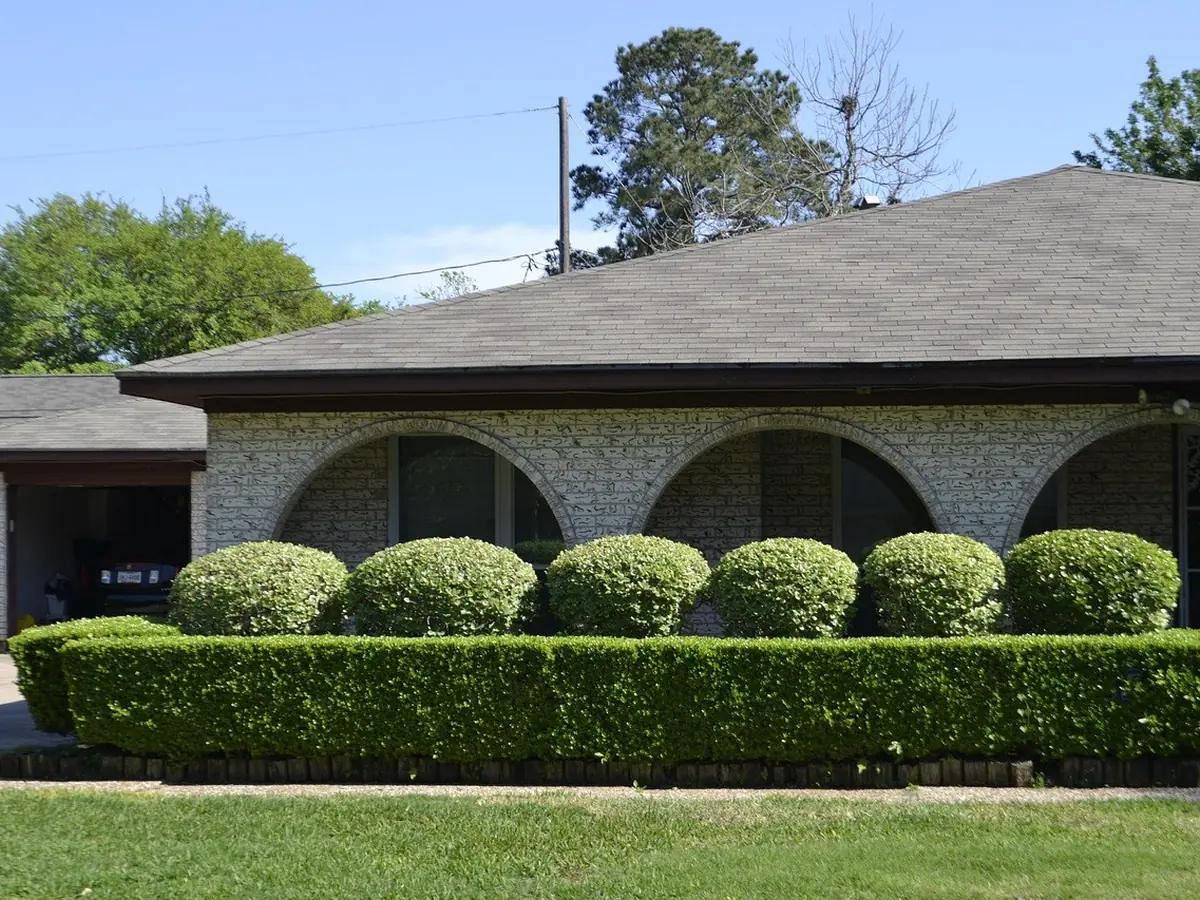
Landscape installation in Tampa covers plant beds, trees and shrubs, sod, mulch, rock, edging, sprinklers, drainage and the paths or patios that tie them together. Nationally, professional landscaping runs $4.50 to $14.50 per square foot, which puts a 500-square-foot area at $2,250 to $7,250 (national ranges, 2026 cost guides). Ask for a written, itemized price after the crew walks your Tampa yard and measures it. Ask for a written start date and finish date with the quote.
Tampa Landscaping Pros comes out and measures, calls you back within one business day, gives a written price before any work starts, and pulls the City permit when the job needs one. The sections below cover what a project includes, what it costs, how each part is done in Tampa's sandy, rain-heavy climate, the rules that apply, and how to compare quotes.
What landscape installation covers
A landscape installation is the building phase that turns a plan into a yard. One project can include any of these:
- Plant bed installation and flower bed installation: layout, edging, soil preparation, plants and mulch.
- Shrub planting and tree planting.
- Sod installation and new lawn installation.
- Mulch installation and rock landscaping.
- Landscape curbing and edging around beds and walks.
- Sprinkler installation and drip irrigation installation.
- Yard grading, yard drainage work and French drains.
- Landscape lighting and hardscape tie-ins such as walkways, patios and walls.
The planting steps below apply to garden installation and plant bed installation alike. Ask for custom landscaping priced by area, with each item on its own line, so you can drop or phase a piece without redoing the whole quote.
Front yard landscaping and backyard landscaping
Measure the area in square feet before you call. At the national range of $4.50 to $14.50 per square foot, a 500-square-foot area runs $2,250 to $7,250, a 1,000-square-foot area runs $4,500 to $14,500, and a 2,000-square-foot area runs $9,000 to $29,000 (2026 cost guides). Use the same size bands to estimate front yard landscaping cost or backyard renovation cost, then add each extra the design includes, such as sprinklers, drainage or a patio, from the cost table below.
Ask the crew which parts of your lot get full afternoon sun, which stay wet after rain, and where a sprinkler zone has to reach. In Tampa about 94 days a year reach 90°F or hotter (NOAA climate normals) and a lawn gets one watering day a week, set by the house number, so those answers change the plant list and the water plan for a front yard or a backyard alike.
Residential and commercial landscaping
Homes and businesses both hire landscape crews. If your property is commercial, say so on the first call and ask whether the scope or the price changes. Tampa's permit fee schedule charges commercial jobs a higher fee than the $214 for a home driveway, patio slab or deck permit and the $475 for a home privacy or retaining wall permit, each plus the state surcharge (City of Tampa fee schedule).
Ask about landscape maintenance before you sign. Some lawn care contracts renew on their own until you cancel, so find out how renewal works and how to stop it (Better Business Bureau). Ask what each maintenance visit includes and whether it is billed by the visit or by the season.
Landscape lighting and outdoor living add-ons
Add-ons are priced as their own lines. National ranges: landscape lighting $2,000 to $4,500, a fire pit $200 to $5,000 and a pond $3,680 to $14,500 (2026 cost guides); an outdoor kitchen $5,057 to $17,276 and a pergola $2,124 to $5,968 (Bob Vila, 2024). Ask for the fixture and transformer warranties in writing.
Cost
Landscaping cost in Tampa: national ranges and what moves the price
The table shows national ranges, because a Tampa price comes from a written quote after the crew measures your yard. The year in each row is the year of the guide it comes from.
| Item | National range | Guide and year |
|---|---|---|
| Professional landscaping, per square foot | $4.50 to $14.50 | National cost guide, 2026 |
| Flower bed | $865 to $3,000 | National cost guide, 2026 |
| Shrub planting | $25 to $230 per shrub | National cost guide, 2026 |
| Tree planting | $100 to $2,000 per tree, depending on size | Bob Vila, 2023 |
| Palm planting | $40 to $250 | Bob Vila, 2023 |
| Larger tree, up to 20 feet tall | About $2,420 | Bob Vila, 2023 |
| Planting labor | $50 to $150 an hour | Bob Vila, 2023 |
| Mulch, installed | $77 to $94 per cubic yard | National cost guide, 2026 |
| Landscape edging | $3.50 to $8.80 per linear foot | National cost guide, 2026 |
| Landscape rock | $50 to $125 per ton, about $650 per project | This Old House, 2026 |
| Sod, installed | $1.65 per square foot on average; St. Augustine $0.98 to $1.79 | National cost guide, 2026 |
| Land grading | $1,175 to $3,645 | National cost guide, 2026 |
| Yard leveling | $1,006 to $3,237, average $2,122 | Bob Vila, 2023 |
| French drain | About $5,000 on average; $10 to $50 per linear foot for an exterior drain | Bob Vila, 2024 |
| Sprinkler system, quarter-acre lot | $1,679 to $3,541, average $2,540 | Bob Vila, 2024 |
| Drip irrigation | $450 to $650 per quarter acre | Bob Vila, 2024 |
| Xeriscaping | $5 to $20 per square foot | Bob Vila, 2024 |
| Landscape lighting | $2,000 to $4,500 | National cost guide, 2026 |
For a Florida comparison only, a 2026 guide shows an average landscaping cost of $1,251 to $1,481 in Orlando, labor and materials included. That is Orlando, not Tampa. For a closer read on typical jobs, see the landscaping cost guide.
What moves the price
- Yard size. The per-square-foot range above is where the size bands come from, so measure first.
- Plant size. A tree's price depends on its size, as the table's tree rows show.
- Ground preparation. Removing weeds and old grass costs $0.88 to $1.84 per square foot with disposal, and tilling and grading before new sod costs $0.90 to $2 per square foot (national, 2026). A lawn soil test is $35 to $100 (national, 2026).
- Hardscape. A walkway runs $9 to $20 per square foot (national, 2026) and a paver patio $8 to $25 per square foot (This Old House, 2026, national).
- Permits. Permits on landscaping work run $50 to $3,000 nationally where one is needed (2026). Tampa's own fees are in the permits section below.
Florida does not charge sales tax on mowing, edging, weed eating and similar lawn care. Planting trees, shrubs and flowers is a real property contract, so the customer pays no sales tax and the company pays tax on the plants and supplies it buys (Florida Department of Revenue).
Ask for the workmanship warranty in writing, with what it covers and for how long. Ask how long new plants are guaranteed and what watering the guarantee expects. A planting company may offer a warranty or replacement if a tree it planted does not survive (Bob Vila, 2023), so ask what the plant guarantee covers.
Step by step
The landscaping process: site visit, design, estimate and walkthrough
A project runs in five steps.
- Site visit. The crew comes out and measures. A company that quotes without seeing the yard cannot know what it needs (Better Business Bureau).
- Design and plan. Ask whether the design fee is flat or hourly and whether it is credited if the same crew installs the plan. A professional landscape design runs $1,944 to $7,213 nationally, average $4,571 (Bob Vila, 2023), and designers charge $50 to $150 an hour. A yard that needs regrading or leveling adds $1,000 to $3,000 for labor and equipment (Bob Vila, 2023, national). Ask how long the design takes and how many revisions are included.
- Itemized estimate. You get a written price before any work starts. A written estimate should list the work, the materials, the completion date and the price (Federal Trade Commission).
- Installation. Work starts after the price is agreed and any City permit is in hand. Florida law requires a call to Sunshine 811 at least 2 full business days before digging, and the locate ticket is good for 30 calendar days.
- Final walkthrough. Walk the job with the crew before the last payment. Do not make the final payment until the work is done and you are satisfied (FTC).
Plant bed and garden installation: beds, trees and shrubs
Florida-Friendly Landscaping has nine principles, from right plant, right place to water efficiently, fertilize appropriately, mulch and reduce stormwater runoff (UF/IFAS).
- Bed layout and edging. Ask the crew to stake out the bed layout and the edging line with you before any plant goes in. Edging runs $3.50 to $8.80 per linear foot nationally (2026).
- Soil preparation. North and Central Florida soils are typically very sandy and do not hold water or nutrients well, and compost or manure improves structure and water holding (UF/IFAS). Urban development in Tampa and Hillsborough County often leaves compacted, nutrient-poor sandy soil (UF/IFAS Extension Hillsborough County, 2026). The median Florida soil pH is 6.1, and most plants take up nutrients best between pH 6 and 7, so amend only when a soil test shows a need.
- Plant selection and massing. Ask how the plan handles plant selection and massing, meaning how many plants of one kind are grouped together.
- Planting. For a tree, dig the hole 2 to 3 times as wide as the root ball and set the root flare even with or slightly above the soil. Mulch at least an 8-foot circle around a new tree, 3 inches deep, and take stakes off within 1 year.
- Mulch. Spread mulch 3 inches deep and top it up when it falls below 2 inches. Keep it about 1 foot back from the base of trees and large plants, because mulch piled against a trunk causes rot.
- Water in. Water a tree planted in spring or summer 2 to 3 times a week, at 2 to 3 gallons per inch of trunk diameter, then weekly until it is established; a 2-inch tree gets 4 to 6 gallons each time.
Plants that survive the local climate and soil
Tampa's average yearly temperature is 74.5°F, about 94 days a year reach 90°F or hotter, and less than 1 night a year drops below freezing (NOAA climate normals). Ask which plants on the list handle that heat and your yard's soil. Live oak, sand live oak, southern magnolia, gumbo limbo and flowering dogwood carry UF/IFAS's highest wind-resistance rating. UF/IFAS advises grouping trees together for stability, keeping roots clear of buildings and walks, and giving a planting site 3 feet of soil depth for storm resilience.
Mulch types, shrub planting and tree planting
Florida-Friendly Landscaping does not recommend cypress mulch; pine straw, pine bark, eucalyptus and melaleuca are common choices. Pine straw settles quickly, while melaleuca settles very slowly and lasts longest. In a UF/IFAS study, pine bark mulch kept about two-thirds of its depth after 2 years.
New shrubs need 20 to 28 weeks to root in enough to live without irrigation (UF/IFAS shrub-watering guidance for Florida). The cooler months are the best time to plant trees, though trees can be planted all year in Florida; keep watering regularly for 1 year or until established (UF/IFAS Extension Hillsborough County, 2024). Ask for tree planting and shrub planting to be priced per plant, with the plant size on each line, and for mulch installation priced per cubic yard, so one quote compares cleanly with the next.
Local conditions
Sod and new lawn installation: grass types, soil prep and watering in
Which grass fits the yard
For the question "what is the best grass for my yard," start with what each of the grass types does. St. Augustinegrass goes in as sod or plugs, and chinch bugs are its hardest pest. Bahiagrass has better drought tolerance than other Florida lawn grasses, can go in as sod or seed at any time of year in much of Florida, and is mowed to 3 to 4 inches. Zoysiagrass goes in as sod or plugs and tolerates shade, salt and traffic well, with slow growth and a tendency to build thatch (UF/IFAS). Bahiagrass and bermudagrass are the best Florida lawn grasses to start from seed.
Sod installation cost depends on the grass. Nationally, St. Augustine sod runs $0.98 to $1.79 per square foot installed and $0.41 to $0.86 without installation, Zoysia $1.04 to $1.65 installed and Bahia $0.77 to $1.26 (2026). In 2026 guides, professional sod installation on a 1,000-square-foot yard runs $1,000 to $2,200 nationally, old grass removal not included. A pallet of sod runs $150 to $450 and covers about 450 to 500 square feet, and sod installation labor is $37.50 to $77.50 an hour, or $0.55 to $1 per square foot (all national, 2026). Sod costs $250 to $620 more than hydroseeding on a 1,000-square-foot lawn (This Old House, 2026).
Soil prep and grading
UF/IFAS lists the soil prep for a new lawn: clear debris, roots and rocks, kill and remove the old grass, get a soil test through the county Extension office, and grade the soil to slope away from the house. Yard cleanup comes first, and never lay sod over existing weeds and grass; remove or kill them first. Rototill compacted soil 6 to 8 inches deep. Sod does best at a soil pH of 6.5 to 7.5 with about 5% organic matter. Grade the lawn 1% to 2% away from buildings or toward drains, and use groundcover on slopes steeper than 3 to 1 (UF/IFAS Extension Hillsborough County).
That same Extension office says to replace a lawn when 30% or more of it is weeds, bare spots or damage. Before patching dead areas, find what killed them: check the sprinklers for missed or overwatered spots and look for insects or disease.
Laying sod and watering in
Lay sod within 24 hours of delivery. Water new sod lightly but often for the first 2 to 3 weeks, keeping the soil moist but not soggy, then taper off once it roots. New sod in Tampa still may not be watered between 4 a.m. and 8 p.m.; the City points to the UF/IFAS 30-day establishment schedule, then normal days apply. Wait 3 to 4 weeks before the first mow and 30 to 60 days before fertilizing.
Spring is usually the ideal time to lay sod in Florida, though sod can root in any season if the ground is well prepared. Summer heat can quickly dry out rootless new sod, and summer rain helps it grow (UF/IFAS News). To start a lawn from seed instead, April to July is the window for warm-season grass in most of Florida. When you compare sod installers, ask who removes the old grass, who grades, and whether the quote lists the sod type, the square footage and the watering plan.
Xeriscaping, rock and gravel landscaping, and turf conversions
Xeriscaping is priced at $5 to $20 per square foot nationally, and it can cut water use by about 50 percent (Bob Vila, 2024). It takes months or longer to create a xeriscaped yard. Florida law defines Florida-friendly landscaping as quality landscapes that conserve water, protect the environment, suit local conditions and tolerate drought, and a local ordinance may not ban it (Florida Statutes). For drought tolerant landscaping, ask xeriscape contractors to explain the plant list, the soil work and the water plan in the quote, since xeriscape installation changes all three.
Heat, rock and turf conversions in Florida's humidity
UF/IFAS cautions that in Florida's humid climate, removing turf can make yards feel hotter. In a California study, rock- and mulch-heavy yards ran up to 54°F hotter at the surface than living lawns, and artificial turf surfaces reached 174°F on the hottest summer days while living grass stayed near 102°F. That was California, not Tampa. The same study notes that homeowners may end up watering artificial turf to make it bearable in summer, which cancels the water savings. If you are weighing a turf conversion, ask about plants as well as artificial turf.
Rock and gravel landscaping
Landscape rock runs $50 to $125 per ton or $45 to $130 per cubic yard, about $650 per project on average, and professional rock installation adds $250 to $2,500, with labor at $50 to $100 an hour and delivery at $200 to $400 (This Old House, 2026, national). River rock is $80 to $150 per ton and pea gravel $20 to $50 per ton or $20 to $70 per cubic yard.
Ask how the rock sits on the ground, what goes under it, and where the water goes when it rains. Old grass removal runs $0.88 to $1.84 per square foot nationally (2026), so ask whether a turf conversion quote lists it on its own line.
Drainage and grading: standing water and French drains
Florida's state soil, Myakka fine sand, is poorly or very poorly drained, with the water table less than 18 inches down for 1 to 4 months in most years (USDA NRCS series description; statewide, not a survey of any Tampa lot). Many Florida flatwoods soils have a weakly cemented organic hardpan, usually 12 to 40 inches down, with a water table that rises to within 5 to 20 inches of the surface (UF/IFAS). That is one reason some yards pond after rain. Because the soils UF/IFAS describes are sandy, ask any drainage company how it moves water through sand and over a hardpan rather than through clay.
How to tell a standing water problem
If surface water has not drained 2 or 3 hours after rain or watering, the yard has a drainage problem and may need subsurface tile drainage (Washington State University Extension, a general guide, not Florida-specific). Sedges, doveweed, dollarweed and eclipta point to soggy soil and may signal a sprinkler leak or poor drainage; the fixes UF/IFAS lists are adding soil to raise the spot, a new drain to divert water, or a rain garden.
Landscape drainage solutions and what they cost
Rain gardens, swales and berms catch and filter runoff, porous patios and walkways let water soak in, and downspouts can be pointed into planted areas (UF/IFAS Florida-Friendly Landscaping). For a lawn, UF/IFAS Extension Hillsborough County advises yard grading of 1% to 2% away from buildings or toward drains. Ask whether the plan uses a French drain, a catch basin or downspout lines, and why.
French drain installation averages about $5,000 nationally, from $500 for minimal work up to $18,000 (Bob Vila, 2024). A French drain in the yard runs $20 to $40 per linear foot, a curtain drain $1,000 to $5,000, and drainage labor $50 to $100 an hour. Land grading is $1,175 to $3,645 (2026), yard leveling $1,006 to $3,237, and topsoil $12 to $55 per cubic yard with fill dirt at $5 to $15 (Bob Vila, 2023). A contractor will likely warranty French drain work for about a year, so get the warranty in writing. When you compare landscape drainage contractors, ask where the pipe outlets, what stone and fabric surround it, and what happens to the water downhill.
Local rules
Irrigation for new landscapes: sprinkler zones, drip lines and watering rules
What Tampa allows
Tampa water customers may water lawns once a week, on a day set by the last digit of the house number: 0 or 1 Monday, 2 or 3 Tuesday, 4 or 5 Wednesday, 6 or 7 Thursday, 8 or 9 Friday. Mixed and no-address properties water Friday. Lawn watering is allowed only from midnight to 4 a.m. or 8 p.m. to 11:59 p.m., never between 4 a.m. and 8 p.m. (City of Tampa Water Use Restrictions, effective April 3, 2026). The regional one-day-a-week order runs until March 31, 2027, and the limits apply to everyone, including homes on private wells (Hillsborough County, September 24, 2026).
Hand watering and micro-irrigation of plant beds is allowed any day, but not between 8 a.m. and 6 p.m. Reclaimed water used for irrigation in Tampa is generally not subject to the restrictions. Ask the Tampa Water Department whether reclaimed water reaches your street before planning a new sprinkler system. Breaking the rules can bring fines up to $500 and a mandatory court appearance.
Sprinkler installation and drip irrigation installation
A professionally installed sprinkler system on a quarter-acre lot runs $1,679 to $3,541, average $2,540 nationally (Bob Vila, 2024). In the same 2024 guide, a 4-zone system is $2,000 to $4,000 and about $3,500 to $7,000 for 7 zones (national), and drip irrigation is $450 to $650 per quarter acre. Sprinkler maintenance is $75 to $85 a year, a rain sensor $10 to $100, and a smart controller $200 to $500.
Florida law requires every automatic lawn sprinkler system to have working technology that stops it when there is enough moisture, and a licensed contractor working on a system must test it and fix or add one (Florida Statutes).
Establishment watering and questions for irrigation installers
Ask any sprinkler installer which licence they work under and check it before you sign. Ask whether the installer will set up irrigation and show you how to use it, including the controller schedule. UF/IFAS says 1/2 to 3/4 inch of water a week is generally the most a home lawn or landscape needs in the hottest part of the year, a ceiling and not a target. After 0.3 inch of rain in 24 hours, or 1 inch in 3 days, irrigation may not be needed that day.
When you price irrigation installation, ask for the number of sprinkler zones, the head type per zone, and whether the quote includes a rain sensor.
Check the current rule with the official source: tampa.gov
The best time to landscape, and how long a landscaping project takes
Tampa averages 49.48 inches of rain a year, and 30.24 inches of it, about 61 percent, falls from June through September; August is the wettest month at 9.03 inches (NOAA climate normals). November is the driest month at 1.40 inches, and October through May are the drier months, so new plantings then lean on irrigation. The rainy season runs from May 25 to October 10 in the Tampa Bay area (National Weather Service), and the Atlantic hurricane season runs June 1 to November 30, peaking around September 10 (NOAA).
The best time to landscape depends on the work. Spring is usually the ideal time for sod, April to July is the seeding window for warm-season grass, and the cooler months suit trees.
How long does a landscaping project take?
Sod needs 3 to 4 weeks before its first mow, a hydroseeded lawn can sprout in 7 to 10 days and be mowed after 4 weeks, and a xeriscaped yard takes months or longer to create. Ask for a written start date and finish date with the quote.
Weather moves the schedule. Florida has the most lightning casualties of all 50 states, and crews stop outdoor work when storms build (National Weather Service). Tampa averages less than 1 night a year below freezing (NOAA climate normal), so ask the company which months it books.
Local rules
HOA approval, permits and the rules a landscape job runs into
HOA approval
Under Florida Statutes, a Florida HOA may not ban an owner from putting in Florida-friendly landscaping on their own land. The statute does not mention artificial turf. If you live in an HOA, get its written approval for artificial turf before work starts. Ask your association for its written landscape rules before the design is set, and ask the crew whether the plan matches them.
Permits and the City of Tampa
The City of Tampa Construction Services Division issues building permits through the city's Accela Citizen Access portal; addresses in unincorporated Hillsborough County go to the county instead. A driveway, patio slab or deck permit is $214 residential, an accessory structure such as a pergola or gazebo is $177, a privacy or retaining wall permit is $475, and residential site clearing up to 20,000 square feet is $298, each plus the Florida surcharge of 2.5 percent of the permit value, $4 minimum (City of Tampa fee schedule). The landscaping permits and rules guide has the full list.
Per the City of Tampa tree permitting page, removing any tree 5 inches or more across at breast height, except invasive species, needs a permit, and pruning a tree 24 inches or more across needs a permit first. A grand tree is 32 inches or more across, and every removal must be replaced by new tree planting or paid into the city tree fund if there is no room on site.
Fertilizer, 811 and who may do the work
In Tampa, lawn and landscape fertilizer with nitrogen or phosphorus may not be applied from June 1 to September 30, and no fertilizer goes within 10 feet of water. Anyone applying commercial fertilizer to a Florida yard for pay must hold the state limited urban landscape fertilizer certification. Ask who will apply any weed or pest treatment and which state licence they hold.
Florida has no general state landscaping licence. Contractors pulling permits in Tampa register their licence with the city and keep a workers' compensation certificate or exemption on file.
Check the current rule with the official source: tampa.gov
Care after installation: how much upkeep do planting and xeriscaping require?
Ask for weekly and seasonal maintenance to be spelled out in writing, including what the first season of watering looks like. Ask whether seasonal color is part of the plan or priced as a separate line.
Weekly and seasonal upkeep
Top up mulch when the layer falls below 2 inches, back to about 3 inches, rather than replacing it. Shrubs take 20 to 28 weeks to root in enough to live without irrigation, and a tree gets weekly watering until it is established, with stakes off within 1 year. Bahiagrass is chosen for relatively low upkeep and is mowed to 3 to 4 inches. New sod waits 3 to 4 weeks for its first mow.
Watering follows the city's day and hour rules above, and UF/IFAS says irrigation may not be needed after 0.3 inch of rain in 24 hours or 1 inch in 3 days. Fertilizer plans in Tampa work around the June 1 to September 30 ban on nitrogen and phosphorus. Ask what a xeriscape needs in its first season.
What upkeep costs
For landscape maintenance costs, a natural lawn on a monthly plan runs $1,500 to $6,000 a year nationally (2026), and sprinkler maintenance runs $75 to $85 a year (Bob Vila, 2024).
Checklist
How to choose a landscape installation company and compare quotes
Ask any landscape installation company for its license number where one applies and for a certificate of insurance sent from its insurance agent. Get a price after an on-site look. Compare bids for the same work, and ask for an explanation if the estimates differ a lot (Federal Trade Commission).
The contract should give the contractor's name and license number, start and finish dates, every promise made about scope and cost, and a written right to cancel; leave no blank spaces. Do not pay the full amount up front; a check or card is better than cash. In Florida, a licensed contractor who takes more than 10 percent of the price up front must apply for any needed permits within 30 days and start work within 90 days after permits issue, unless you agreed otherwise in writing (Florida Statutes). A residential contract over $2,500 must carry a lien warning, so ask for a written release of lien.
In-house crews vs subcontractors, and how to choose a landscaper
Ask who does each part of the job, whether crews are the company's own or subcontracted, and who answers when a plant dies. For the full checklist, see how to choose a landscaping company. Scam signs include a knock on your door from someone "in the area", leftover materials, pressure to decide now, a request for everything up front or cash only, and a request that you pull the permits yourself (FTC).
Common problems and what they mean
New Sod Turning Yellow or Brown
New sod turning yellow or brown in Tampa? See the possible causes, what to check first, Tampa's new-sod watering rules and what re-laying sod costs.
Standing Water in Yard
Standing water in your Tampa yard after rain? See what to check, the causes, and national drain and regrading costs. Written price after the crew measures.
Brown Patch in Lawn
Round brown patches in your Tampa lawn? See how to tell brown patch fungus from chinch bugs and grubs, what to change, and national repair costs.
Grub Damage in Lawn
Grub damage in lawn in Tampa? See how white grubs differ from chinch bugs and fungus, what repair involves, and what re-sodding costs nationally.
Chinch Bug Damage and Dead Patches in Tampa Lawns
Chinch bug damage in Tampa lawns shows as yellow to brown patches. See how to check the edge, what else it could be, and what a repair involves.
Moss in Lawn
Lawn full of moss in Tampa? See what lets moss take over, why shade, drainage and soil come first, and what the fix costs, with national price ranges.
Fairy Ring in Lawn
A fairy ring in a Tampa lawn does no long-term harm, says UF/IFAS. See the causes, look-alikes, Tampa fertilizer and watering rules, and national patch costs.
Thick Thatch in Lawn
Thick thatch in lawn in Tampa? See what makes grass spongy and shed water, how it differs from compaction, what dethatching involves and how to get a quote.
Compacted Soil Lawn
Compacted soil lawn in Tampa? Learn the push test, what causes a hard packed yard, how aeration, compost and new sod fix it, and what to ask before you hire.
Dry Spots in Lawn That Stay Brown
Dry spots in lawn that stay brown after watering in Tampa: causes, checks, the city's watering rules, national fix costs and how to get a written price.
Lawn Full of Weeds
Lawn full of weeds in Tampa? Learn what clover, dandelions and dollarweed say about soil, mowing and watering, and what a re-sod costs nationally.
White Powder on Grass in a Shady Tampa Lawn
White powder on grass in a shady Tampa lawn? See how to tell powdery mildew from look-alikes, what to change under Tampa's rules, and national costs.
For typical prices and what moves them, see Landscaping Cost.
Nearby towns
Town guides: Landscaping in St. Petersburg, FL, Landscaping in Clearwater, FL, Landscaping in Dunedin, FL, Landscaping in Temple Terrace, FL.
Cost
Estimate your project cost
Pick a project and its size to see the typical installed price range from national cost data.
| Project | Size | Typical range | Source |
|---|---|---|---|
| Yard landscaping | 200 sq ft | $900–$2,400 | HomeAdvisor |
| Yard landscaping | 500 sq ft | $2,250–$6,000 | HomeAdvisor |
| Yard landscaping | 1,000 sq ft | $4,500–$12,000 | HomeAdvisor |
| Concrete paver patio | 200 sq ft | $900–$4,200 | HomeAdvisor |
| Concrete paver patio | 500 sq ft | $2,250–$10,500 | HomeAdvisor |
| Concrete paver patio | 1,000 sq ft | $4,500–$21,000 | HomeAdvisor |
| Brick paver patio | 200 sq ft | $1,600–$5,000 | HomeAdvisor |
| Brick paver patio | 500 sq ft | $4,000–$12,500 | HomeAdvisor |
| Brick paver patio | 1,000 sq ft | $8,000–$25,000 | HomeAdvisor |
| Artificial turf | 200 sq ft | $1,000–$4,000 | HomeAdvisor |
| Artificial turf | 500 sq ft | $2,500–$10,000 | HomeAdvisor |
| Artificial turf | 1,000 sq ft | $5,000–$20,000 | HomeAdvisor |
Yard landscaping uses the source's own ranges by yard size. Patio and turf ranges are the source's installed price per square foot times the size you pick. Access, slope, removing an old surface and the materials you choose move the real price; a written quote sets it.
Sources: HomeAdvisor, HomeAdvisor, HomeAdvisor.
Landscaping FAQ
Why do my plants keep dying in August?
August is Tampa's hottest month, with a normal high of 91.2°F, and its wettest, with 9.03 inches of rain in a normal year. Sandy soil does not hold water or nutrients well, and hand watering of plant beds is allowed any day but not between 8 a.m. and 6 p.m. Ask the crew what the planting plan counts on for August: heat, heavy rain, or the plant's place in the yard.
Do I need to replace the soil in my beds?
Amend soil only when a soil test shows a need. The UF/IFAS Extension Soil Testing Laboratory tests samples, and compost improves structure and water holding in sandy soil. The median Florida soil pH is 6.1, slightly acidic.
What is the best grass for my yard?
It depends on sun, shade, traffic and how much water the yard gets. Bahiagrass has better drought tolerance, zoysiagrass tolerates shade, salt and traffic, and St. Augustinegrass goes in as sod or plugs and is hit hard by chinch bugs (UF/IFAS). Ask which grass the crew would match to your lot and why.
Do landscapers work year-round?
Tampa averages less than 1 night a year below freezing. Trees can be planted all year in Florida, with the cooler months preferred, and crews stop outdoor work when storms build. Ask the company which months it books and how it schedules around the rainy season.
Can I request sustainable or low-water-use landscaping?
Yes, you can ask for it. Florida-Friendly Landscaping principles include right plant, right place, water efficiently and reduce stormwater runoff, and xeriscaping can cut water use by about 50 percent (Bob Vila, 2024). Florida law says a local ordinance may not ban Florida-friendly landscaping.
Can existing plants or features be kept in a new landscape?
Ask the crew to mark what stays before the written price. In Tampa, removing a tree 5 inches or more across at breast height needs a permit, and every removal must be replaced by new tree planting or paid into the city tree fund.